
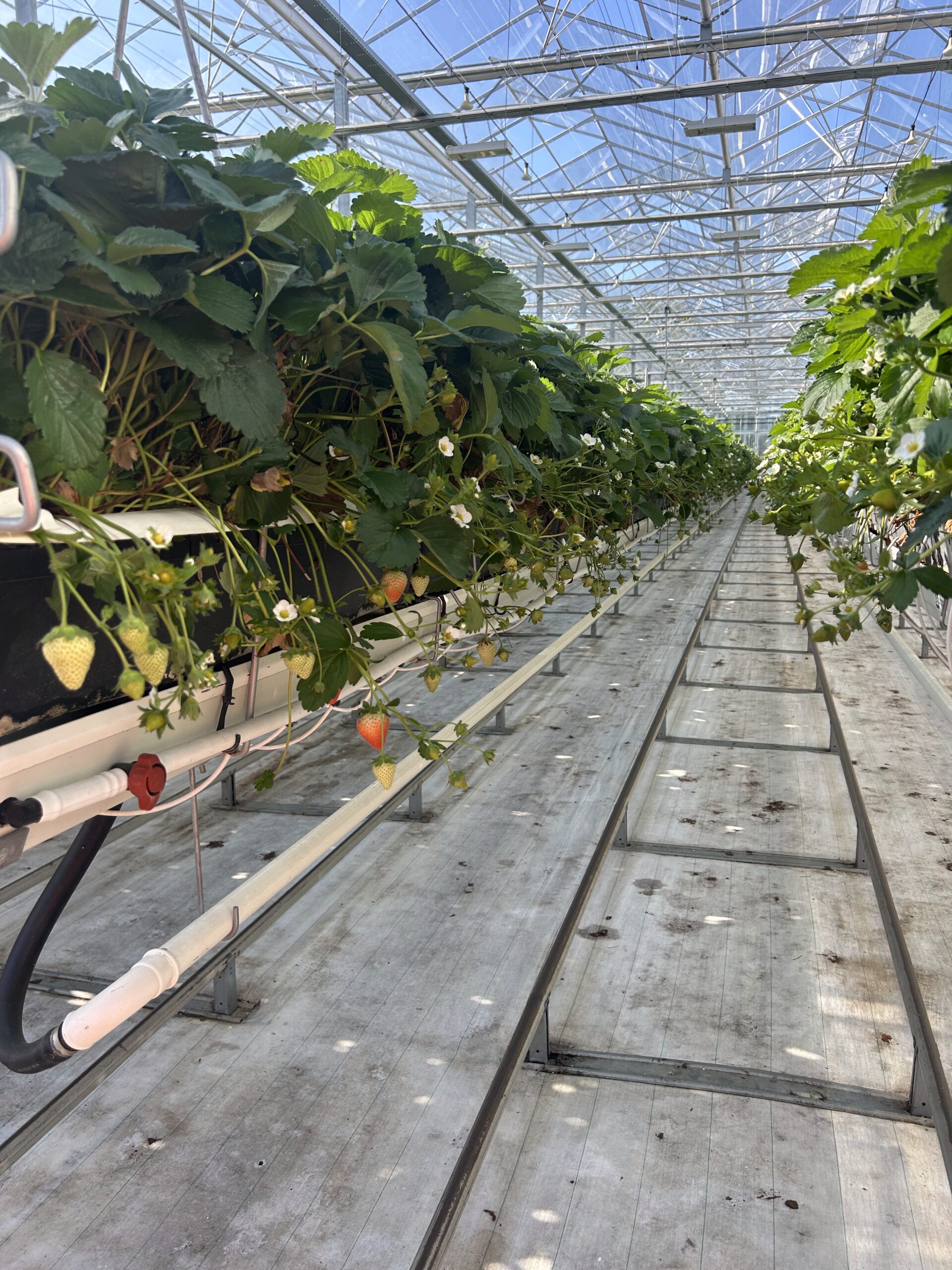
Last week, 25 EFG members and prospective members gathered at Dyson Farming’s Carrington site for our North Lincolnshire Summer Farm Tour. Set against the backdrop of some of the most cutting-edge agricultural infrastructure in the UK, the tour offered a unique glimpse into the future of sustainable, tech-driven farming.
A Model for Modern Agriculture
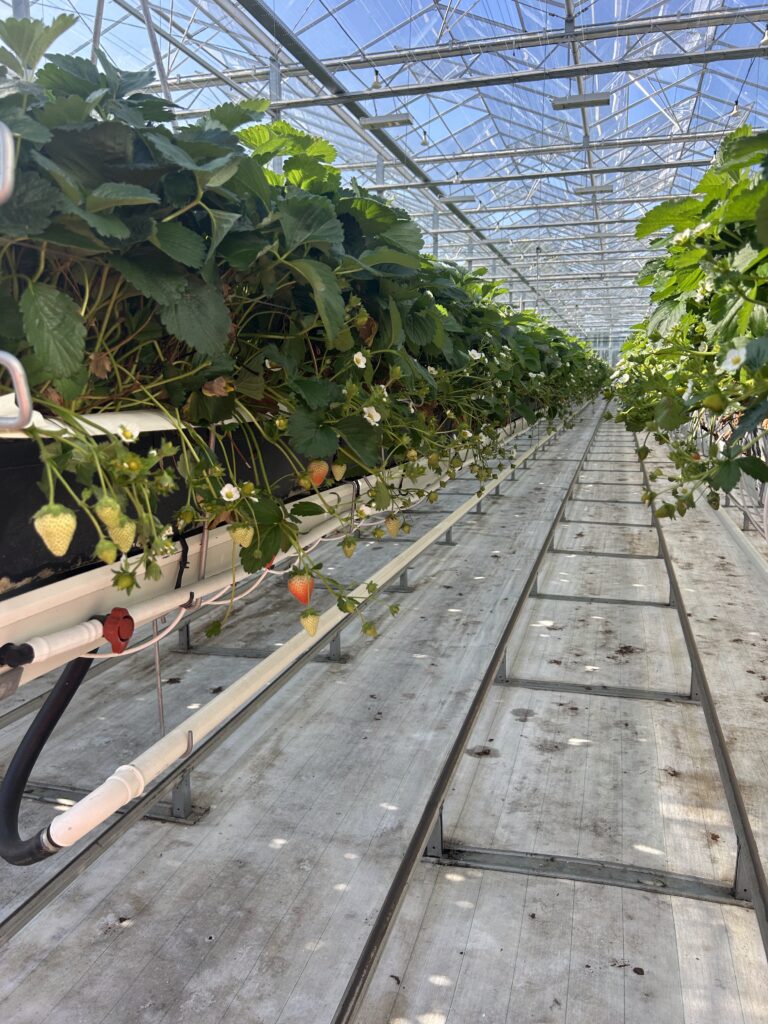
Dyson’s Carrington site is nothing short of impressive. The farm is home to 16 hectares of state-of-the-art glasshouses, producing an incredible 1,250 tonnes of strawberries each year. These are no ordinary glasshouses – powered and heated by the adjacent AD plant, which, in conjunction with the Nocton AD facility, generates enough power to heat the equivalent of 10,000 homes.
The event began with an overview of recent EFG progress from Rob Shepherd (EFG Chairman) and Tom Vacher (Natural Capital Advisory), who shared updates on 12 recent environmental trades secured through EFG. This was chance for participants to put questions to the EFG team and share thoughts with farming peers within the room.
Following this, we heard from Joe Stanley from the GWCT Allerton Project – Allerton are supporting EFG with the NEIRF funded North Lincs Carbon Baselining project. Joe presented their latest research on soil organic matter (SOM) and carbon emissions. Two interesting takeaways from his talk included:
- A 700% increase in emissions recorded from a plough-based system compared to direct drilling methods at Allerton.
- A 143% decrease in earthworm populations linked to biochar application—a surprising result that sparked plenty of discussion among attendees.
From here we were then taken on the site tour with attendees given a closer look at Dyson’s remarkable innovations and operational scale. Here are just a few of the standout insights:
- Dyson invested £2 million in drainage improvements during the first two years of farm ownership across the country.
- 12% of Dyson’s farming area is enrolled in environmental schemes.
- 3% of land at the Nocton Farm is allocated for trial work and agricultural R&D.
- The glasshouses are supported by 24 robotic fruit pickers and span half a mile from end to end.
- The glasshouse investment cost £30 million and stage 1 (initially 10ha of glasshouses) was built in just six months.
- The AD plant processes 250 tonnes of feedstock per day from 14 silage clamps. Further research is needed to enable excess Co2 from the AD to be used in the Strawberry production and interestingly even at that scale, the AD plant would not be viable without a feed-in tariff.
This event was a fantastic opportunity to connect EFG members and those considering membership, all whilst experiencing how innovation, environmental stewardship, and agricultural productivity can work hand in hand.
A huge thank you goes to Ben Abell and the Dyson Farming team for hosting such an informative and inspiring day.