
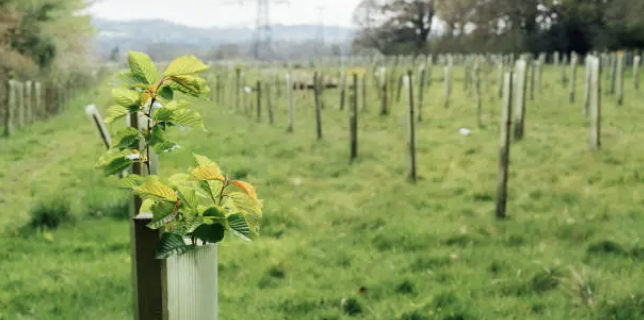
Woodlands sequester carbon alongside wider environmental benefits such as cleaner air, enhanced biodiversity, improved water quality and natural flood management. In the UK, woodland creation can also generate carbon credits for sale under the Woodland Carbon Code (WCC), offering farmers and landowners an opportunity to diversify income while contributing to national climate and biodiversity targets.
EFG’s Woodland Carbon Project, funded by Defra’s Natural Environment Investment Readiness Fund (NEIRF), has been assessing whether planting new woodland and processing through the WCC could offer a diversified, viable income stream for farmers. Crucially, the project sought to evaluate whether combining multiple projects together might offer added value for EFG Members.
As part of EFG’s Environmental Delivery Programme, potential new habitat sites across Member farms are being mapped, including woodland, to identify opportunities for environmental change.
The EFG carbon project at a glance
Over the last 12 months, EFG and project partner, Zulu Ecosystems, have:
- Worked with 21 farm businesses across South England.
- Identified over 500 hectares of potential woodland creation.
- Modelled over 250,000 Pending Issuance Units (PIUs) – representing 250,000 tonnes of CO₂ that could be captured over the next 100 years by EFG Members (this is the equivalent to Waitrose’s annual combined Scope 1, 2 and 3 emissions).
- Engaged with potential carbon credit buyers.
- Met with Woodland Carbon Code, the Forestry Commission and the Soil Association to assess viability and cost-savings of grouping smaller woodland projects.
Project Story
Zulu Ecosystems began carrying out woodland landscape assessments across the Hampshire Avon, Dorset Stour, and Test & Itchen catchments, identifying the best woodland creation opportunities based on current land cover, soil type and available grants. Members interested in creating woodland then worked one-to-one with Zulu Ecosystems to scope projects, with each site checked against WCC criteria such as soil type, land classification, grants and physical constraints, so Members could assess the natural capital opportunities.
A core aim was to test aggregation by removing barriers to entry for farmers with smaller projects, such as high validation and verification fees, allowing them to benefit from woodland carbon income. Under WCC version 3.0, landowners can register as a group, managing multiple sites under one umbrella while sharing validation and verification costs. Groups can include up to 15 projects under a single validation, while the Code also sets out a lighter-touch route for “small projects” (1-10 hectares), making aggregation accessible for farms that might not meet thresholds on their own.
We also commissioned EFG sponsors, Land Family Business (as accountants) and Thrings (as solicitors), to provide specialist tax and legal advice on the WCC. The main findings from their joint report were:
- Setting up a Special Purpose Vehicle for WCC was unnecessary and added an additional tax burden,
- There was scope to look at a single Group Agreement for multiple projects to reduce administrative costs (without joint liability of all projects),
- The current Environmental Farmers Group membership structure was the most tax efficient way to sell carbon credits arising for WCC projects.
Case Study: Scoping a Woodland Carbon Project
To illustrate what scoping a woodland carbon project looks like in practice, here’s an example from work with one EFG Member, Avington Park Farm, a 200-hectare mixed farm in the Test & Itchen catchment.
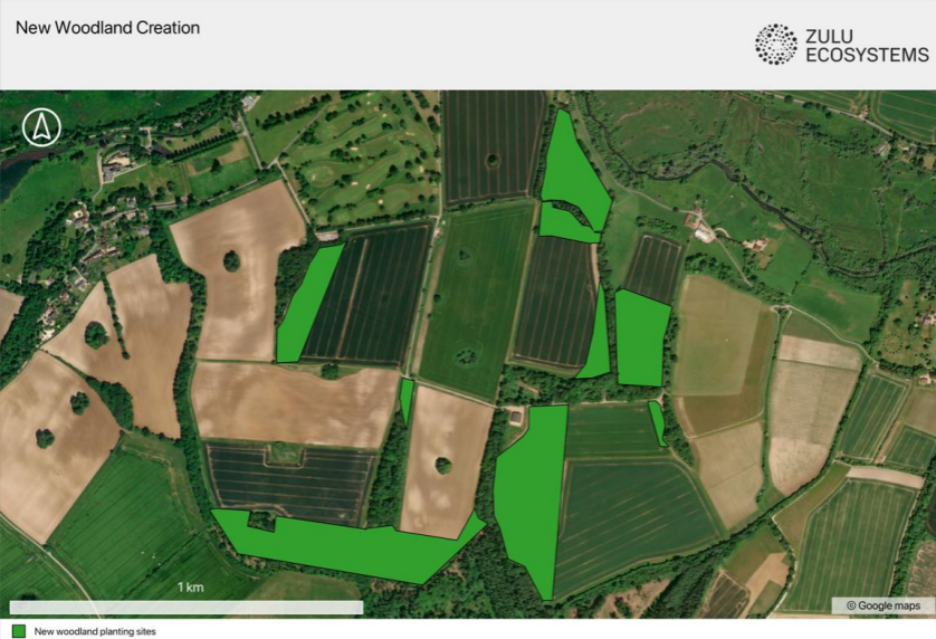
Figure 1. Sites selected for woodland creation
The process began with a desktop assessment of land use and soil data to identify parcels best suited for woodland creation (Figure 1). Avington Park suggested 30 hectares of potential sites for woodland creation.

Figure 2. grant schemes applied to woodland creation sites
Available grant schemes were then overlaid to show which parts of the site could attract the most support, helping the farmer understand how public funding could reduce establishment costs (Figure 2).
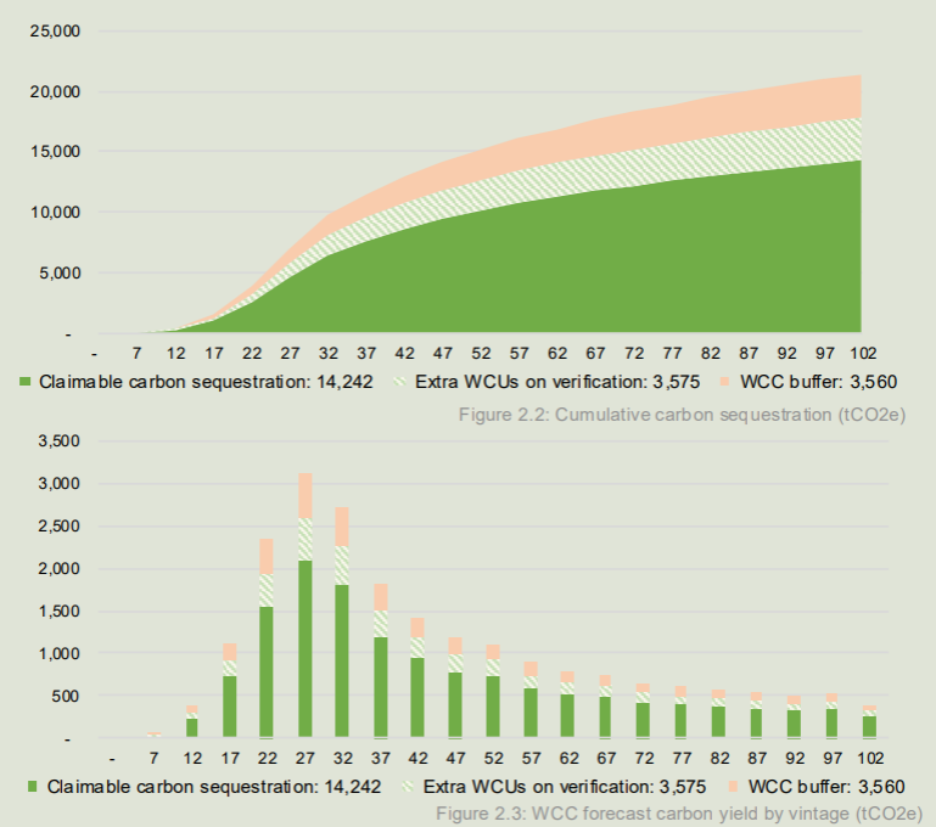
Figure 3. forecasted carbon units from woodland creation sites
Carbon modelling estimated the volume of Pending Issuance Units (PIUs) that could be generated as claimable carbon sequestration, giving the farmer a clear picture of potential long-term income streams (Figure 3). Avington Park could therefore sequester 14,000-18,000 tonnes of CO2e on a 30-hectare site over a 100-year project cycle.
By visualising the opportunities through maps and estimating carbon credit generation and project costs, farmers can see both the environmental and financial potential of woodland creation before committing to planting.
What Farmers Need to Know: Key Risks and Considerations
1. Cashflow
Woodland carbon projects require significant upfront investment, while income from credits often arrives years later. Grants, advance sale of carbon units, or other financing options are essential to bridge the cashflow gap.
2. Carbon Pricing & Sale Strategy
The current average price of carbon (around £30/tonne) does not make woodland as attractive as other land uses at present. However, the price of carbon is forecast to increase, so registering a project now is advantageous, allowing for flexibility in the timing of when to sell credits.
3. Public Funding is Essential
Grants are available for new planting through the England Woodland Creation Offer and the Woodland Creation Planning Grant. Without this public support, projects may struggle to cover fencing, planting and establishment costs. Registering a project now is advisable as grant funding is unlikely to last as the price of carbon increases.
4. Land Use Trade-offs
Planting trees involves long-term land use change (40 to 100-year commitment). Projects are most viable on marginal or unproductive land, where woodland can complement food production. Other habitats must be considered and may be more suitable than woodland. Project findings suggest the most suitable parcels are land areas which were historically woodland, often taken out to improve food production during the War.
Why It Matters for Farmers
As the UK carbon market grows, so will the scrutiny, standards and expectations. EFG is committed to helping its members navigate this space with confidence, bringing together farmers, funders, and policy partners to scale solutions that work on the ground.
If you’re considering a woodland carbon project or would like more information about woodland carbon, please do get in touch with us.
Useful links
The Woodland Carbon Code | Woodland Carbon Code
Author: Hamish Drake, Project Manager, Natural Capital Advisory